


Weaving Collaboration, Caring for Culture : Nautika Foundation’s Role as a Bridge in Strengthening Alor Ikat Weaving

Threads of woven cloth never stand alone. They are born from patient hands, from stories passed down through generations, and from long-standing relationships between people, nature, and culture. In Alor, ikat weaving is not merely fabric, it is a living language rooted in the everyday lives of women weavers.
From 15 to 17 November 2025, that language found a broader space to be heard. Alor Regency hosted the Technical Guidance Program on Enhancing the Competitiveness of Alor Ikat Weaving, a collaborative initiative organized by the National Crafts Council (Dekranas) and the Directorate General of Regional Development of the Ministry of Home Affairs (Kemendagri), with support from Dekranasda of Alor Regency. In this process, Nautika Foundation served as a field implementation partner, acting as a bridge between weaving communities and the central government to ensure that dialogue moved beyond ceremony and into meaningful, long-term engagement.
From the very first day, the atmosphere was rich with cultural expression. The delegation was welcomed by a traditional Cakalele dance performed by students of SMP Negeri Alor Besar, a gesture of hospitality and respect from the local community. Among the distinguished guests were the Daily Chair of Dekranas, Mrs. Tri Tito Karnavian, the Director General of Regional Development of Kemendagri, Dr. Ir. Restuardy Daud, M.Sc, CGRE, along with senior officials from national and regional institutions and the Chair of Dekranasda Alor Regency, Mrs. Lidya Siawan Winaryo.

In her address, the Daily Chair of Dekranas emphasized that the preservation of local culture must be positioned as a central component of national development. According to her, Alor Ikat Weaving embodies not only cultural identity and historical value, but also real economic potential that can strengthen household resilience and support community livelihoods. She highlighted the importance of cross-sector collaboration as the foundation for strengthening the weaving ecosystem, spanning technical training, access to raw materials, design innovation, market access, and product downstreaming.
As a concrete demonstration of commitment, Dekranas and the Directorate General of Regional Development officially purchased 200 pieces of Alor Ikat cloth to be marketed outside the region. For the weavers, this step represented more than a transaction, it marked an opening toward new market pathways and recognition of their work within the broader creative economy.
The atmosphere became deeply personal when Mama Sariat Tole, Head of the Gunung Mako Weaving Center, took the stage, accompanied by the Head of Alor Besar Village, Sirajudin Ali, S.Pd. In her words, weaving was not simply a livelihood, but a way of life. Through weaving, children are able to continue their education, households remain sustained, and hope continues to grow.
With visible emotion, Mama Sariat expressed her wish that one day the President of the Republic of Indonesia could visit Alor and witness firsthand the lives of weavers who safeguard culture from their homes. She shared the community’s intention to present a 30-meter-long woven cloth as a symbol of cultural friendship, as well as a special 150-meter cloth currently being created collectively as an offering of prayer, hard work, and hope for the future.
“This weaving is not only work of the hands, but work of the heart,” she said softly.
The program continued with the presentation of commemorative plaques, the distribution of raw material assistance to 75 weavers, and a field visit to the Gunung Mako Weaving Workshop. There, guests observed natural dyeing processes, yarn spinning, and the use of traditional looms. The use of local plants as natural dyes received particular appreciation for its ecological value and economic potential. As a symbol of sustainability, cotton seedlings and natural dye plants were planted together with the weavers, underscoring the message that culture cannot survive without nature, and nature cannot be protected without tangible social and economic support.
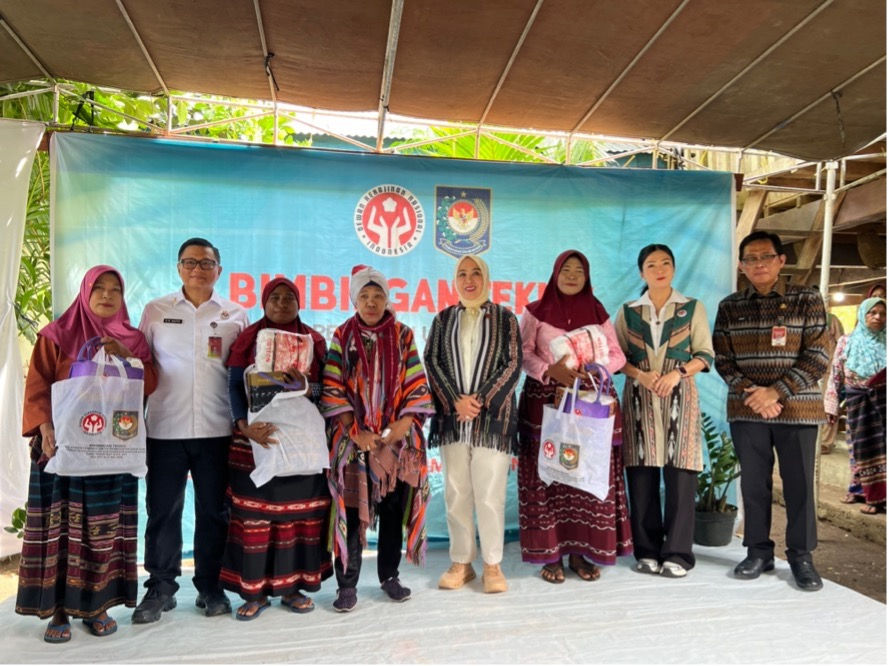
Throughout this process, Nautika Foundation played its role as a connector, ensuring that the voices of weavers were heard, field realities were understood, and government programs were translated into locally grounded action. For Nautika Foundation, cultural accompaniment is an integral part of community-based development, where people, nature, and the local economy are addressed as an interconnected system.
Hansen Oei, Director of Nautika Foundation, expressed his appreciation for the weavers’ consistency in safeguarding local wisdom amid rapid change. He noted that the weavers are not merely preserving tradition, but actively weaving the future of Alor’s cultural identity. He also conveyed his gratitude to Dekranas, the Directorate General of Regional Development of Kemendagri, the National Border Management Agency (BNPP), the Alor Regency Government, and local communities for their shared belief that development can grow from culture.

The three-day program concluded with a shared lunch featuring traditional Alor dishes prepared by the Ikan Asap Sebanjar MSME group, a community enterprise supported by Nautika Foundation. This moment highlighted the connection between cultural strengthening, local economic development, and community-based tourism.
Over the course of three days, the initiative demonstrated that Alor Ikat Weaving is not merely a legacy of the past, but a foundation for the future. Through synergy between central and local governments, weaving communities, and supporting partners, Alor now holds a real opportunity to become a national example of how culture can be preserved while simultaneously empowering communities.
From threads woven with patience, a powerful message emerges, that hope can grow from the hands of mothers. And when collaboration continues to be carefully woven, Alor is not only preserving its history, but also crafting a new chapter of Indonesia’s development from the east.


The post about collaboration and caring for culture shows how important shared effort can be when communities want to protect what matters to them. I especially liked the idea of creating bridges between different people and perspectives. In my own studies, I once needed Programming Assignment Writing Services in UK when I was struggling to organise a technical project. That experience taught me that cooperation can make difficult tasks feel more manageable. Strong communities often grow when people are willing to share knowledge and listen.
This post about Nautika Foundation's role in strengthening Alor Ikat weaving is really inspiring. It highlights how collaboration between communities, government, and organizations can preserve cultural heritage while empowering local economies. I remember working on a cultural preservation project where I had to research similar community-based initiatives and wanted to make sure my writing was clear. I reached out for help with assignment to guide me through it. Good cultural insights and good support help you understand how weaving traditions are not just art but a way of life and hope for the future. It showed me how self care matters. It helped me understand large projects better. Nice post . Your post make me smile.
This post about collaboration and caring for culture is really inspiring. It highlights how organizations can act as bridges to strengthen communities and preserve heritage. I remember working on a cultural preservation project where I had to research similar collaborative efforts and wanted to make sure my writing was clear. I used an assignment proofreading service to help me catch any mistakes. Good cultural insights and good support help you understand the power of collaboration in preserving traditions. It showed me how self care matters. It helped me understand large projects better. Nice post . Your post make me smile.
Great content with useful advice for pool owners who want to enjoy crystal-clear water all year long. I appreciate the simple explanations and practical maintenance tips. I would definitely recommend Weekly Pool Cleaning Services in Gilbert, AZ to anyone looking for dependable and professional pool care.
I like how this page focuses on improving both the beauty and functionality of older swimming pools. The remodeling suggestions are realistic and informative. I would gladly recommend Pool Remodeling in Pearland, TX to anyone planning to refresh their outdoor living space.